Start here
Screen quota, trade-defense and CBAM before comparing supplier prices.
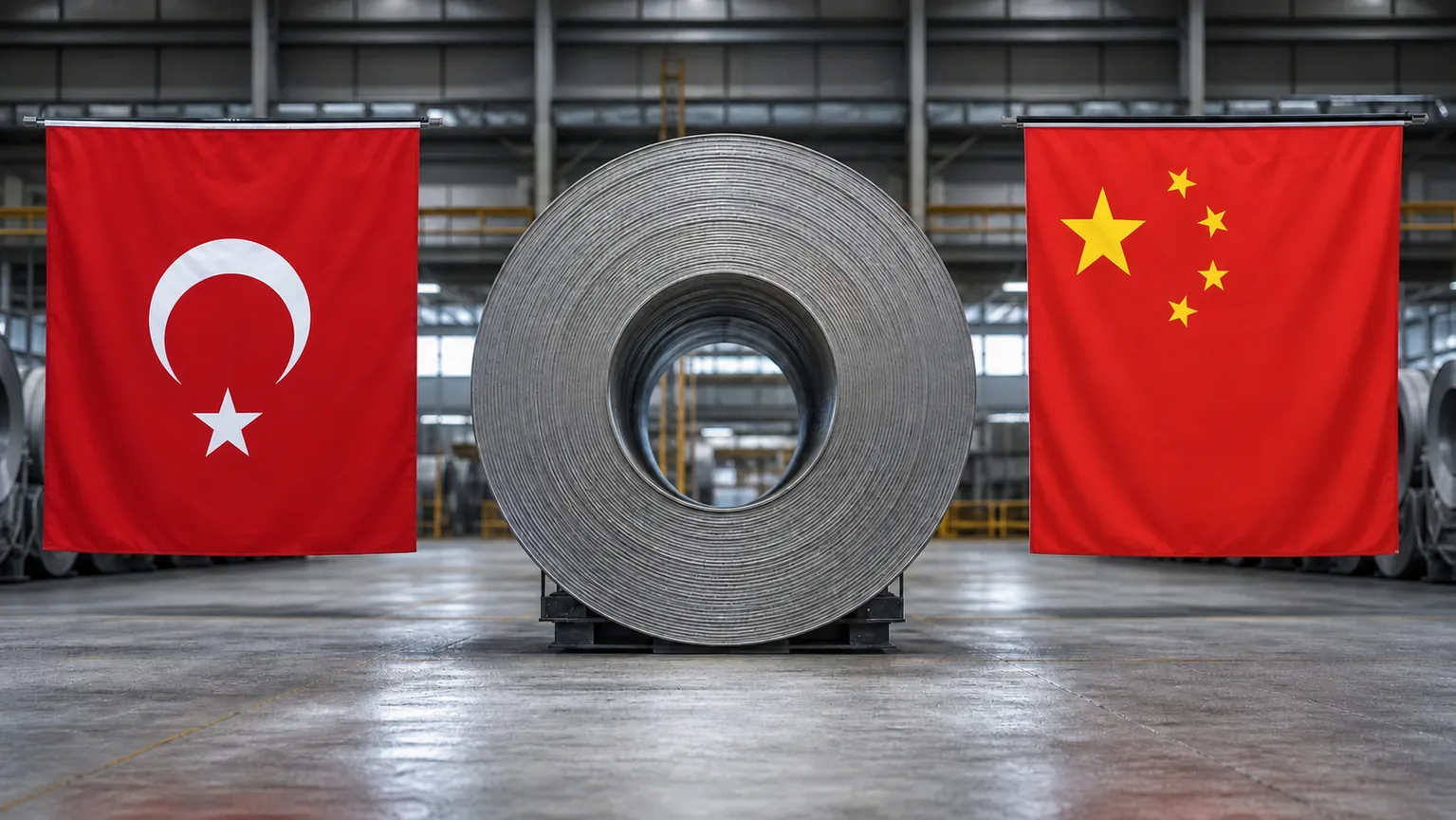
Last updated: July 26, 2026. SteelFromTurkey supplies hot-rolled and cold-rolled coil from Turkish mills and coordinates specification review, documentation, inspection and export delivery through one commercial workflow.
On July 1, 2026, the EU replaced its temporary steel safeguard with a permanent tariff-rate-quota regime, Regulation (EU) 2026/1384, that cut duty-free volumes and doubled the out-of-quota duty. Turkey is not exempt from this regime: it holds its own country-specific quota, not a blanket exemption.
Separately, Turkey carries an active EU antidumping order on hot-rolled coil and faces a live antidumping investigation on cold-rolled coil with no outcome yet. This guide screens all of that before comparing supplier prices.
Customs notice: this guide is commercial sourcing information, not legal or customs advice. The importer of record and a licensed customs broker should confirm classification, current quota fill status, cash-deposit rates and the outcome of the pending Turkish CRC investigation before entry.
Duty stack
What is the 2026 EU duty stack for flat steel - China vs Turkey?
As of July 2026, both hot-rolled and cold-rolled flat steel from China and Turkey face the EU's ordinary customs duty, the new EU steel tariff-rate-quota regime and CBAM certificate obligations on embedded carbon.
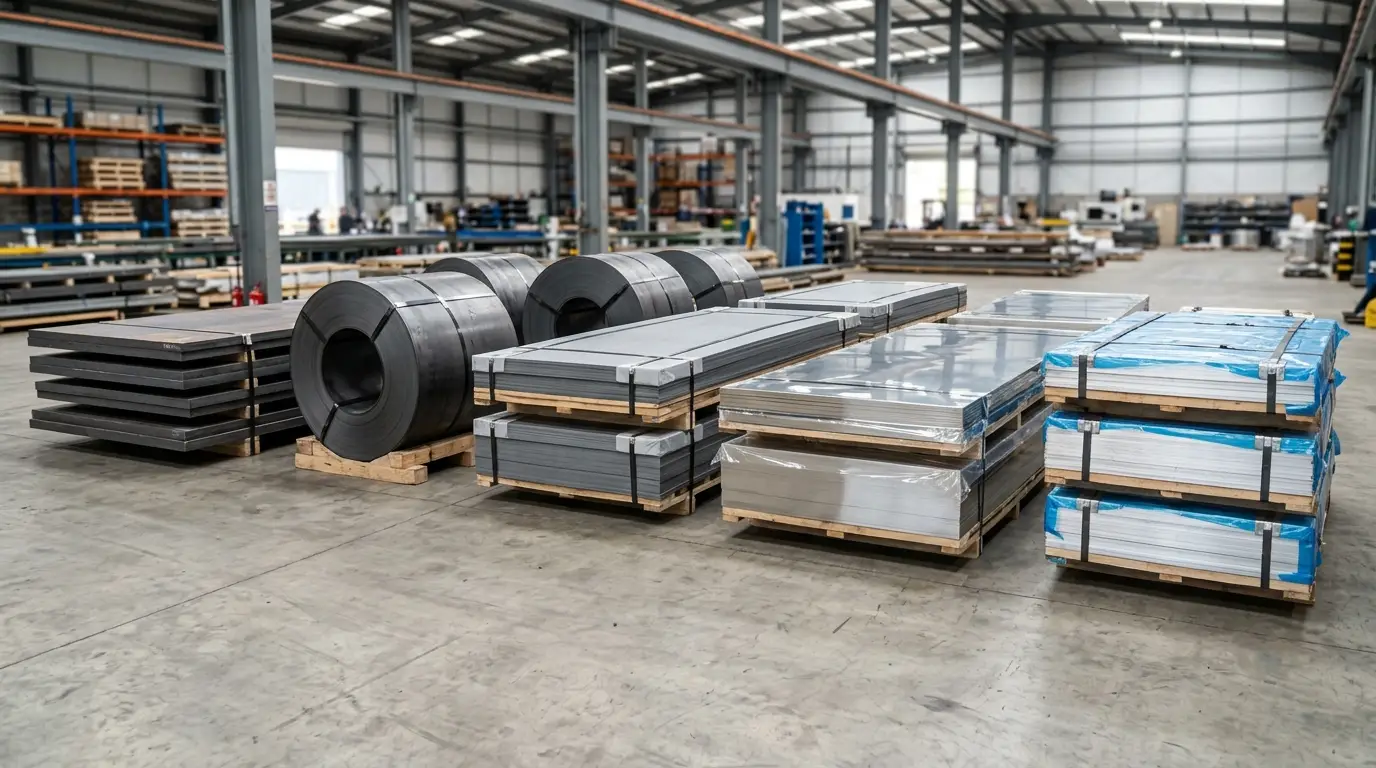
CN 7208 and CN 7209 carry no MFN duty for either origin. The 50% out-of-quota duty applies to every origin once the relevant quota is exhausted, including Turkey. China additionally carries EU antidumping and countervailing duties specific to each product. Turkey carries a smaller antidumping duty on HRC only, with a CRC investigation still open.
| Layer | China | Turkey | Applies to both? |
|---|---|---|---|
| Ordinary (MFN) customs duty | 0% | 0% | Yes - CN 7208/7209 base rate is duty-free for all origins |
| EU steel TRQ - in-quota | 0% | 0% | Yes, while each origin's own country quota has volume left |
| EU steel TRQ - out-of-quota | 50% | 50% | Yes - same rate, applied to whichever origin has exhausted its own quota first |
| Antidumping - HRC | 1-31.3% company-specific, 2022 continuation | 4.7-7.3% company-specific, active, under sunset review since Apr 2026 | Both - different legal cases, different rates |
| Countervailing - HRC | 4.6-35.9% company-specific | None - CVD investigation on Turkish HRC was officially terminated | China only |
| Antidumping - CRC | 17.2-27.9% company-specific, 2022 continuation | None yet - live investigation opened Dec 2025, alleged dumping margins 10-50%, no provisional or definitive duty published as of this update | China: active. Turkey: pending, verify before contracting |
| CBAM | Default 3.167 tCO2e/t without verified data - EUR 5.94/t net in 2026, rising to about EUR 115/t net by 2030 at current ETS price | Route-dependent: scrap-EAF mills about EUR 0.14/t net in 2026; BF-BOF mills about EUR 2.57/t net in 2026 - no Article 9 deduction either way | Both - but the per-tonne gap is large and depends on which Turkish mill route you buy from |
Worked example
Worked example: EUR 150,000 entered-value shipment.
The following tables are an illustrative screening only, not an entry quote. They compare two products, HRC and CRC, across two origins and two Turkish quota scenarios.
| HRC screened item | China | Turkey - quota open | Turkey - quota exhausted |
|---|---|---|---|
| Entered value | EUR 150,000 | EUR 150,000 | EUR 150,000 |
| MFN duty (0%) | EUR 0 | EUR 0 | EUR 0 |
| EU steel TRQ | EUR 75,000 - China's own category quota fills fast; treat as likely out-of-quota | EUR 0 within Turkey's CSQ | EUR 75,000 at 50% once CSQ is used up |
| Antidumping, midpoint used for illustration | EUR 24,300 - 16.2% midpoint of 1-31.3% | EUR 9,000 - 6% midpoint of 4.7-7.3% | EUR 9,000 |
| Countervailing, midpoint | EUR 20,250 - 20.25% midpoint of 4.6-35.9% | EUR 0 | EUR 0 |
| Total duty | EUR 119,550 | EUR 9,000 | EUR 84,000 |
| Effective rate | 79.7% | 6.0% | 56.0% |
| CRC screened item | China | Turkey |
|---|---|---|
| Entered value | EUR 150,000 | EUR 150,000 |
| MFN duty (0%) | EUR 0 | EUR 0 |
| EU steel TRQ, assume out-of-quota for illustration | EUR 75,000 | EUR 0 if within CSQ / EUR 75,000 if exhausted |
| Antidumping, midpoint of 17.2-27.9% | EUR 33,825 | Unresolved - investigation open, no rate to model. If EUROFER's alleged 10-50% dumping margin becomes the basis for a provisional duty, this could range roughly EUR 15,000-EUR 75,000 on this shipment size. |
| Total duty | EUR 108,825 (79.3%; CVD not yet identified for this product) | EUR 0-EUR 75,000 depending on quota status, plus an unknown AD layer once the investigation concludes |
Reading: on HRC, Turkey's real advantage over China is large and mostly intact - roughly 74-24 percentage points depending on Turkey's quota status, driven by the absence of CVD and a much smaller AD rate. On CRC, China's stack is known and heavy; Turkey's is currently the lighter of the two but not yet fixed. The open investigation is the single biggest swing factor for a long lead-time CRC contract.
AD/CVD history
AD/CVD and trade-defense history.
The China and Turkey duty layers come from separate EU proceedings. Treat product, origin and exporter identity separately before modeling landed cost.
China - hot-rolled coil
Definitive AD and CVD were imposed in 2017 and continued for a further five years in the June 2022 expiry review following a EUROFER request. Current company-specific rates are AD 1-31.3% and CVD 4.6-35.9%, in force through roughly 2027.
China - cold-rolled coil
Definitive AD was imposed in 2016, with China and Russia jointly investigated, and continued via Commission Implementing Regulation (EU) 2022/2068 following a 2021 EUROFER expiry-review request. Current company-specific rates are Shougang Jingtang 17.2%, Annex-I-listed exporters 26.1% and all other Chinese exporters 27.9%. No CVD component is identified in this case.
Turkey - hot-rolled coil
Definitive AD was imposed in April 2021 following a EUROFER complaint filed in May 2020: Habaş 4.7%, Çolakoğlu 7.3%, Oyak/Erdemir-İsdemir group 4.9%, Borçelik and Ağır Haddecilik 5.6%, and all other Turkish exporters 7.3%. A parallel CVD investigation on Turkish HRC was officially terminated without duties.
The AD order was due to expire around July 2026, but EUROFER filed a new sunset-review request on April 1, 2026; the Commission opened the review, and under standard EU practice the existing duties remain in force for the duration of the review. Treat this as active, not expired.
Turkey - cold-rolled coil
There is no existing AD/CVD order. A new investigation was opened by the European Commission following a EUROFER complaint filed in August 2025, with a notice published around December 2025, covering India, Japan, Taiwan, Turkey and Vietnam. EUROFER's complaint alleges dumping margins in the 10-50% range across the named origins.
Standard EU procedure allows provisional measures within seven to nine months of initiation and a final decision within 14 months. Provisional duties could therefore land from mid-2026 onward. This is the most important item to recheck before quoting a Turkish CRC order with a long lead time.
EU steel regime
Regulation (EU) 2026/1384 replaced the temporary safeguard.
On July 1, 2026, the temporary steel safeguard, Implementing Regulation (EU) 2019/159, expired and was replaced by a permanent instrument, the EU Steel Overcapacity Regulation.
Three changes matter for sourcing decisions: total duty-free volume across 26 steel categories is now 18,345,922 tonnes per year, on average 47% lower than safeguard-era quotas; the out-of-quota duty rose from 25% to 50%; and from October 1, 2026, importers must document the country where the steel was actually melted and poured, not just where it was last processed.
Turkey's country-specific quota for Category 1A, non-alloy and other-alloy hot-rolled sheets and strips, is 642,295 tonnes per year. It is the largest single-country allocation in that category, but roughly 60% smaller than Turkey's old safeguard allocation. Customs Union membership gives Turkey its own quota; it does not create a duty-free pass. Once that quota is used, Turkish HRC pays the same 50% out-of-quota duty as Chinese HRC.
Practical implication for buyers: ask for current CSQ fill status at RFQ stage, not at shipping stage. Under the old safeguard, Turkish HRC and pipe or hollow-section quotas routinely filled within the first weeks of a quarter; smaller quotas should be treated as a real planning risk.
Smaller quota pool
18,345,922 t/yr across 26 categories, with Category 1A representing about a third of the total.
Higher penalty layer
The out-of-quota duty moved from 25% to 50%, changing landed-cost scenarios quickly once a CSQ is full.
Melt-and-pour traceability
From 1 October 2026, origin planning depends on where the steel was melted and poured, not only where it was rolled or processed.
CBAM
CBAM for flat steel: direct emissions only, route decides the number.
Steel is an Annex II CBAM good: only direct process emissions are priced, not the electricity used to make it. This is the same treatment as aluminum extrusion and different from what some buyers assume.
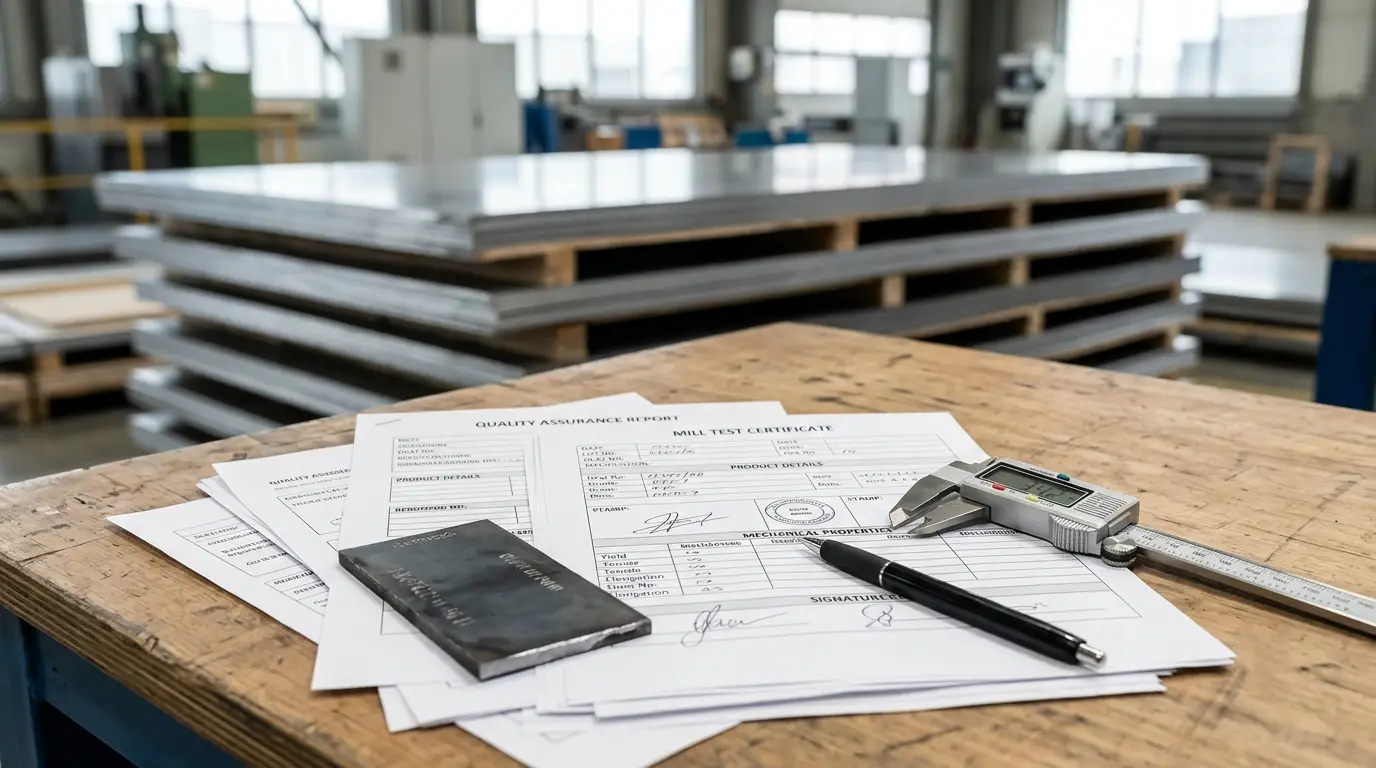
Three official benchmarks apply under Implementing Regulation (EU) 2025/2621: BF-BOF at 1.370 tCO2e/t, DRI-EAF at 0.481 and scrap-EAF at 0.072.
China has no default value advantage. Absent verified facility data, Chinese steel slab is assigned a default of 3.167 tCO2e/t, more than double the BF-BOF benchmark, and China's ETS does not yet cover the steel sector, so no Article 9 deduction applies.
Turkey has no Article 9 deduction either, but Turkish flat steel comes from a mixed BF-BOF and scrap-EAF base. A scrap-EAF Turkish mill's CBAM certificate cost, about EUR 0.14/t net in 2026, is roughly 40 times lower than the China-default cost. A BF-BOF Turkish mill is close to the general BF-BOF benchmark cost, about EUR 2.57/t net, still meaningfully below the China default but not free.
Do not present this as a flat Turkey beats China on carbon line. The actual number depends entirely on which specific mill is supplying. Ask for the production route, EAF or BF-BOF, before quoting a CBAM-adjusted landed cost.
Sourcing comparison
What actually changes when sourcing flat steel from Turkey instead of China?
The advantage is not a simple price shortcut. It is a risk-adjusted sourcing decision covering duty exposure, quota timing, documentation visibility, CBAM route data and export coordination.
| Decision factor | China-origin HRC/CRC | Turkey-origin HRC/CRC |
|---|---|---|
| MFN duty | 0% | 0% - no advantage either way |
| EU steel TRQ, in-quota | Category quota historically fills fast | 0% while Turkey's 642,295 t/yr HRC CSQ lasts |
| EU steel TRQ, out-of-quota | 50% | 50% - same rate once CSQ is used up |
| HRC AD/CVD | AD 1-31.3% + CVD 4.6-35.9% | AD 4.7-7.3%, no CVD |
| CRC AD/CVD | AD 17.2-27.9%, no CVD | None yet - live investigation, verify before long-lead contracts |
| CBAM | Default 3.167 tCO2e/t unless verified data supplied | Route-dependent, EAF vs BF-BOF - ask the mill |
| Melt-and-pour documentation from Oct 2026 | China is already the origin | Required from Oct 1, 2026 - important if the coil was not melted in Turkey |
| Quota exhaustion risk | High - category quotas fill quickly | Real, but historically the largest single CSQ in Category 1A |
How we supply
How SteelFromTurkey supplies flat steel from Turkey.
SteelFromTurkey manages HRC and CRC inquiries through an RFQ-led process: specification review, supplier fit against suitable certified Turkish mill routes, production route confirmation for CBAM, current CSQ fill-status check, documentation and export delivery planning.
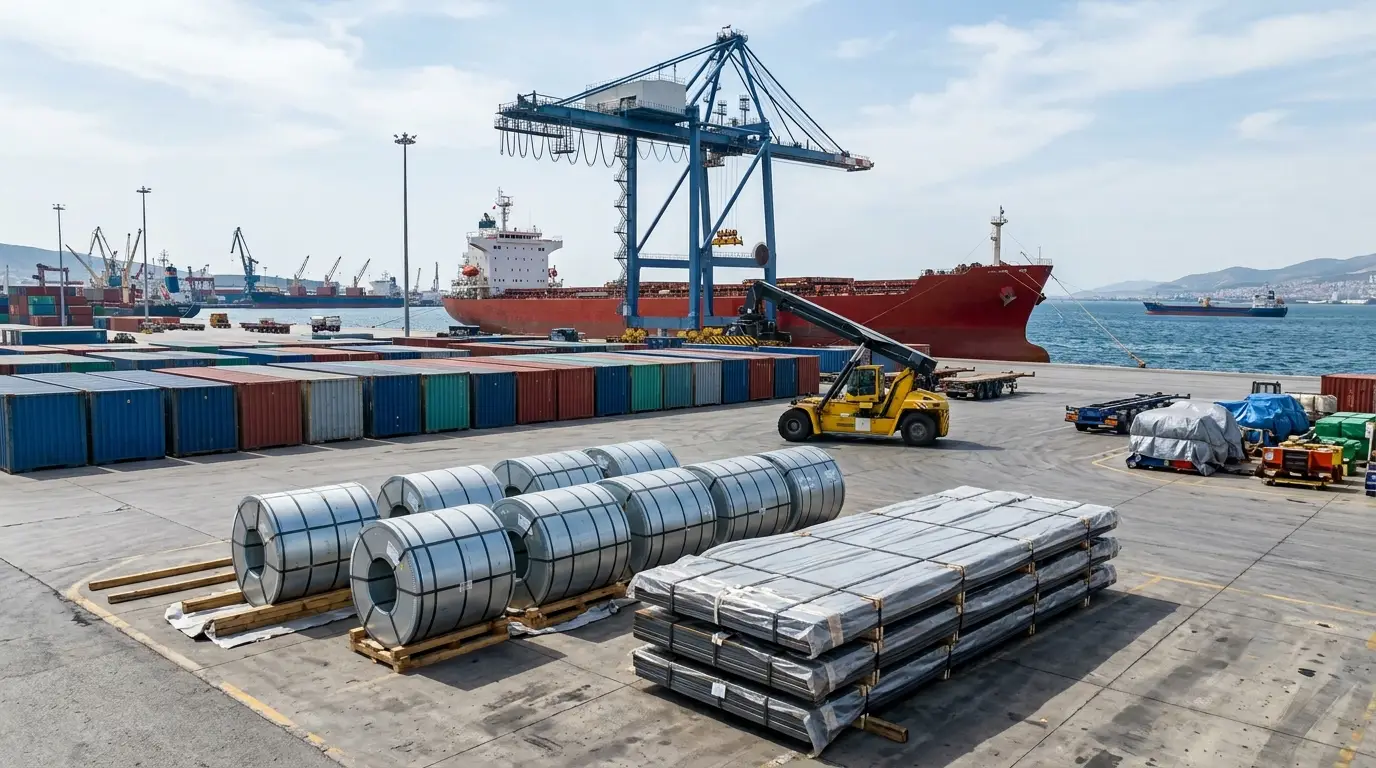
The specification review covers grade, thickness, width, coil weight, surface finish and mechanical properties. Documentation may include mill test certificate, certificate of origin and third-party inspection where required.
For a workable quotation, send grade and standard, such as EN 10025-2 or EN 10130; thickness and width tolerance; coil weight and quantity; surface or finish requirement; end-use; required certificate type; destination port; and preferred Incoterm.
Sources
Official sources and reference materials used in this guide.
These sources should be rechecked before entry or long lead-time contracting because quota fill, cash-deposit rates and investigation outcomes can change.
| Source | Use in guide |
|---|---|
| Regulation (EU) 2026/1384 - EU Steel Overcapacity Regulation | New permanent steel TRQ regime and 50% out-of-quota duty |
| Commission Implementing Regulation (EU) 2022/2068 | CRC China continuation, 17.2-27.9% AD |
| June 2022 HRC China AD/CVD continuation decision | China HRC AD 1-31.3% and CVD 4.6-35.9% |
| Commission decision, April 2021 - definitive AD on Turkish HRC | Turkey HRC AD 4.7-7.3% and terminated CVD investigation |
| Sunset review notice, April 2026 | Turkish HRC AD measures under review, duties remain in force |
| EU Official Journal notice C_202505025 | CRC investigation opened against India, Japan, Taiwan, Turkey and Vietnam |
| SteelOrbis coverage of post-safeguard CSQ allocation | Turkey Category 1A CSQ of 642,295 t/yr |
| CBAM Guide steel sector and China/Turkey country profiles | Benchmarks, default values and country carbon-price context |
| Implementing Regulation (EU) 2025/2621 | Official CBAM steel benchmarks |
FAQ
EU flat steel sourcing questions
Is Turkey exempt from the EU 2026 steel TRQ?
No. Turkey has its own country-specific quota under the new regime. Once the relevant Turkish quota is exhausted, the same 50% out-of-quota duty applies.
Why can Turkish HRC still be cheaper landed than Chinese HRC?
The main modeled advantage is not MFN duty, which is 0% for both. It comes from Turkey's lower HRC antidumping rate and the absence of a CVD layer, provided quota status is still favorable.
Is Turkish CRC duty-free for EU buyers?
It has no existing AD/CVD order as of the July 26, 2026 update, but a live EU antidumping investigation is open. Recheck the investigation before long lead-time CRC contracting.
Does CBAM automatically favor Turkey over China?
No. CBAM depends on the actual production route and verified data. A Turkish scrap-EAF route can be much lower than the China default, but a buyer should confirm EAF versus BF-BOF before modeling landed cost.
What should I send for a quote?
Send grade and standard, thickness, width, coil weight, quantity, surface or finish requirement, end-use, certificate requirement, destination port and preferred Incoterm.